Türkiye İş Bankası Museum of Economic Independence: The Bank Where Economic Independence Was Born
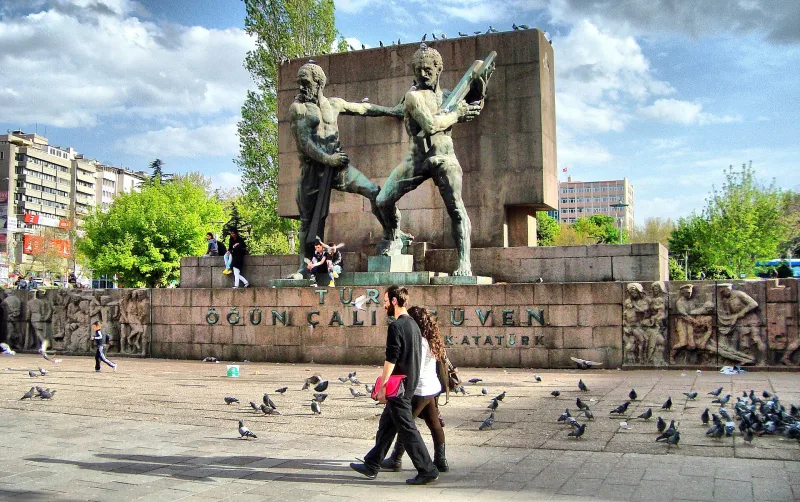
On Ulus Square in Ankara, facing the Victory Monument and just a few steps from the Grand National Assembly, stands a five-story building with a distinctive late-Ottoman façade. This is the first headquarters of Türkiye İş Bankası—a bank founded in 1924 on the initiative of Mustafa Kemal Atatürk himself. Since May 2, 2019, the İktisadi Bağımsızlık Müzesi—the Museum of Economic Independence—has been operating here, telling the story of how the young Turkish Republic built its own banking system and fought for financial sovereignty.
History of the Museum
The building was constructed in 1929 based on a design by Italian architect Giulio Mongeri—one of the masters who shaped the appearance of early Republican Ankara. Mongeri is also known for his designs of the Maltepe Camii mosque and many administrative buildings from the 1920s and 1930s. The structure was originally intended to serve as the headquarters of Türkiye İş Bankası—the first major national bank, founded with Atatürk’s direct involvement in 1924 to ensure the economic independence of the young republic.
For decades, the building served as the bank’s main office. When the bank’s headquarters moved to a modern building, the historic office in Ulus was restored and opened in 2019 as the İktisadi Bağımsızlık Müzesi. During the restoration, the original banking interiors—teller windows, deposit safes, executive offices, and a conference room—were deliberately preserved, giving the museum a particularly atmospheric feel.
Collection and Highlights
Basement: Bank Safes
The basement of the building preserves the original deposit safe deposit boxes with heavy metal doors and numbering. This is a rare opportunity to see what a 1930s bank back office looked like from the inside: polished metal, control systems, and mechanisms thought out down to the smallest detail.
First Floor: Operations Hall
The first floor preserves the atmosphere of the former operations hall: teller counters, customer service counters, and furniture typical of the era. Here, exhibitions are also on display about the bank’s daily operations during the early years of the Turkish Republic.
Meeting room with Ataturk’s history
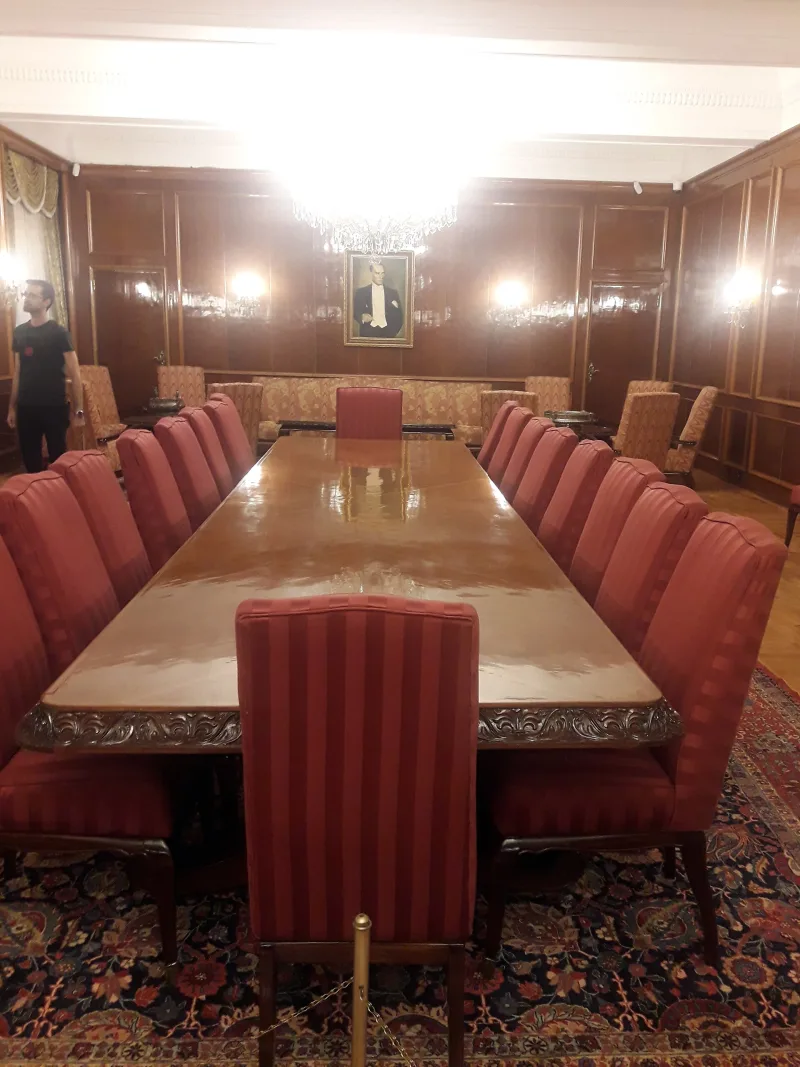
On the second floor is the famous meeting room where Mustafa Kemal Atatürk personally attended during his visits to the bank. The original table, chairs, and photographic documents have been preserved. This is the place where issues regarding the formation of the Turkish national economy were discussed, and therefore it holds special memorial significance.
Floors of Documents and Advertising
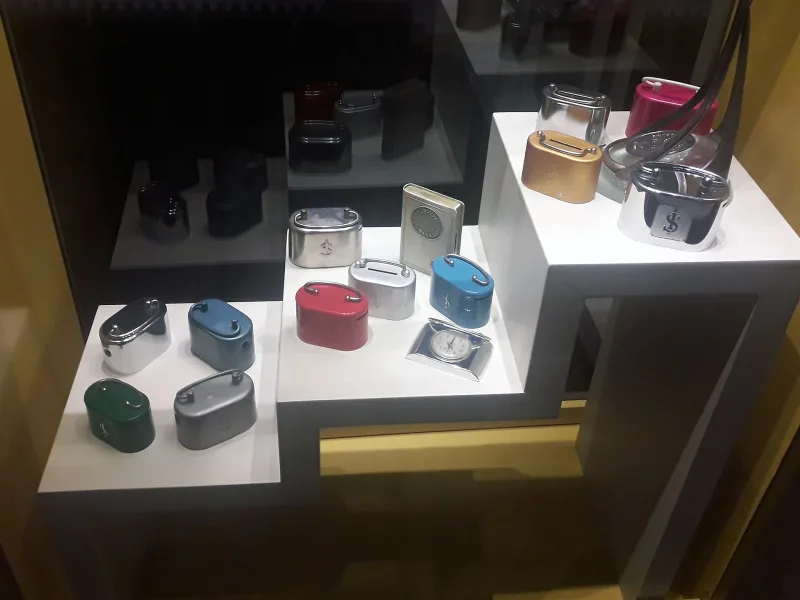
The middle floors feature an extensive collection of historical documents, early advertising posters and commercials from Türkiye İş Bankası, as well as examples of the first shares, passbooks, and penny banks that encouraged the public to save. This material tells the economic history of Turkey through visual design.
War of Independence Hall
The fourth floor is entirely dedicated to a permanent exhibition on the Turkish War of Independence (1919–1923). This section illustrates how the military victory laid the foundation for economic independence and why it was only after this victory that the establishment of İş Bankası and other state institutions became possible. Also on display here is an original painting depicting Kurt Bullent.
Architecture by Giulio Mongeri
The building itself is an example of the neoclassical style with elements of the “Turkish National Renaissance,” characteristic of the architecture of the early Turkish Republic. Its stone cladding, symmetrical façade, and well-balanced proportions make it one of the most notable architectural landmarks in Ulus.
Interesting Facts
- Türkiye İş Bankası was founded on August 26, 1924, on the initiative of Mustafa Kemal Atatürk and became the first major national bank of the young Turkish Republic.
- The building’s architect, Giulio Mongeri, was an Italian who worked in Istanbul and Ankara from the late 19th century; he designed the Maltepe Camii mosque and many buildings from the early republic.
- The museum opened on May 2, 2019—marking the 95th anniversary of the bank’s founding—and has become one of Turkey’s most unusual corporate museums.
- The basement houses the original bank vaults, making a visit feel like a journey into an authentic 1930s film.
- Türkiye İş Bankası remains one of Turkey’s largest banks today; the museum at its historic headquarters is a rare example of a corporation preserving its own history while making it a public asset.
How to get there
The museum is located on Ulus Square, opposite the Victory Monument, in the very heart of old Republican Ankara. The nearest metro station is Ulus (Ankaray line), a few minutes’ walk away. It’s a convenient 10-minute ride by metro or minibus from Kızılay.
GPS coordinates: 39.9428° N, 32.8547° E. From Esenboğa Airport (ESB), take the HAVAŞ bus or a taxi to Ulus. Within a 500-meter radius are other important landmarks: the PTT Stamp Museum, Hacı Bayram Mosque, the Column of Julian, as well as Ankara Castle and the Museum of Anatolian Civilizations.
Tips for travelers
Allow about 1.5–2 hours for a leisurely tour. It’s especially worth spending some time in the meeting hall (where Atatürk used to visit) and in the basement section with the bank vaults—these are the most atmospheric parts of the museum. The War of Independence Hall also requires time for a thoughtful exploration.
The museum is open daily except Mondays, usually from 10 :00 to 18 :00—but it’s best to check the exact schedule before your visit. It’s convenient to combine your visit with nearby attractions: the PTT Pul Müzesi is literally across the street, and both sites can easily be explored in a single day. If you have time, head up to the Ankara Kalesi fortress and visit the Museum of Anatolian Civilizations.
There is a bookstore at the entrance with publications on Turkish history and banking—a good source of materials in Turkish and English. Photography is generally permitted without a flash. For anyone wishing to understand not only the military but also the economic aspects of the founding of the Republic of Turkey, the Türkiye İş Bankası Museum of Economic Independence is a must-see in Ankara.